
Outdoor Lighting Design: How South Jersey's Best Properties Shine After Dark
You invested six figures in your outdoor living space. The natural stone patio, the custom kitchen, the specimen plantings that took three seasons to mature. But at sundown, all of it disappears. Your property goes dark, and the investment you made in curb appeal, entertainment space, and landscape architecture becomes invisible for half of every 24-hour cycle.
Professional outdoor lighting design is the single most underrated upgrade for luxury properties in South Jersey. It does not just illuminate your yard. It transforms a daytime-only space into a 24/7 living environment, extends usable hours through every season, and creates the kind of dramatic visual impact that separates a well-maintained home from a truly distinguished property. Done correctly, landscape lighting turns your outdoor spaces into something that stops people mid-sentence when they walk outside after dark.
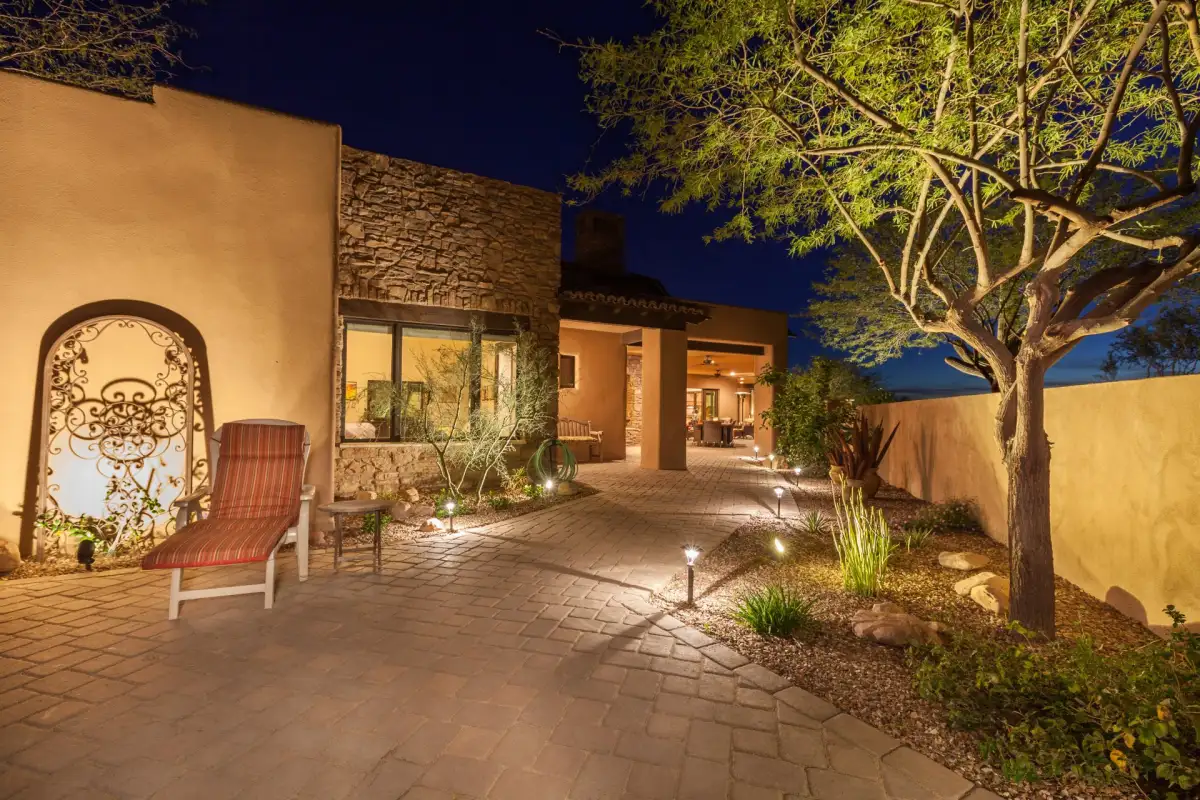
Architectural Lighting: The Foundation of a Luxury Property at Night
Architectural lighting is what makes your home itself look extraordinary after dark. This is the technique you see on high-end properties in Moorestown, Haddonfield, and the shore communities of Cape May County, where facades seem to glow with a warmth that is impossible to achieve with standard floodlights bolted to the soffit.
The three primary architectural techniques are uplighting, grazing, and wall washing. Uplighting positions fixtures at the base of your home and aims them upward, casting light across the facade to emphasize height, texture, and architectural detail. Grazing places fixtures very close to a surface, typically two to six inches away, to accentuate texture on stone walls, brick veneer, or stucco. Wall washing positions fixtures further back, three to four feet, to bathe an entire surface in even, diffused light.
For South Jersey homes with stone or brick exteriors, grazing produces the most dramatic results. The light catches every ridge, joint line, and surface variation, creating depth and shadow that flat daylight never reveals. Stucco and smooth-sided homes respond better to wall washing, which creates a clean, gallery-like glow. Columns, archways, and entryways benefit from dedicated uplighting that draws the eye to architectural focal points and establishes a sense of arrival.
Path and Step Lighting: Where Safety Meets Elegance
Every walkway, staircase, and transition between elevation changes on your property needs lighting. This is not optional for luxury installations. It is a safety requirement and a design opportunity. The goal is to guide movement through the landscape without revealing the fixtures themselves. The light should appear to emerge naturally from the environment.
For hardscape walkways and patios, low-profile path lights in the 12- to 18-inch height range provide sufficient illumination without dominating the sightline. Brass and copper fixtures in dark bronze or antique finishes blend into planting beds and disappear during daylight hours. Step lights, recessed directly into stone risers or retaining walls, eliminate tripping hazards while creating a layered glow that defines the geometry of your hardscape at night.
Spacing matters significantly. Path lights placed too close together create a runway effect that looks commercial and overly uniform. The standard for residential luxury is 8 to 10 feet apart on straight paths, with additional fixtures at curves, intersections, and grade changes. Every step riser should have its own light, typically one fixture for steps under four feet wide and two fixtures for wider staircases.
Landscape Focal Point Lighting
Specimen trees are the single most impactful element in nighttime landscape design. A mature oak, Japanese maple, or ornamental cherry that has been properly uplit becomes a living sculpture. The technique involves placing two or three fixtures at the base of the tree, angled upward into the canopy. The light filters through the branch structure and foliage, creating depth, texture, and dramatic shadows on the ground beneath.
Beyond trees, garden bed accent lights draw attention to seasonal color, ornamental grasses, and sculptural plantings. These are typically lower-wattage fixtures positioned to create pools of light rather than broad illumination. The contrast between lit focal points and the surrounding darkness is what gives a professionally designed landscape its nighttime drama.
Water features deserve special attention. A fountain, pond, or waterfall that looks pleasant during the day becomes a centerpiece at night when lit from below or behind. Submersible LED fixtures rated for continuous underwater use can transform a simple bubbling rock into a glowing focal point visible from every window in the back of the house. The interplay of light and moving water creates a visual effect that no other landscape element can match.
Outdoor Living Area Lighting
Your outdoor kitchen, dining area, and lounge spaces each require a different lighting approach. The mistake most homeowners make is treating the entire entertaining area as a single zone. Professional lighting design layers three types of light across your outdoor living space: task, ambient, and accent.
Task lighting provides the focused, bright illumination needed for cooking and food preparation. Under-counter LED strips, pendant fixtures over the grill, and recessed downlights beneath a pavilion roof keep the cook safe and effective without flooding the entire patio in harsh light. Aim for 50 to 75 foot-candles on cooking surfaces.
Ambient lighting sets the overall mood for dining and socializing. This is softer, warmer, and more diffused. String lights, lantern-style pendants, and indirect cove lighting along pergola beams create an inviting atmosphere that encourages guests to linger. Fire features, whether gas fire pits, fireplaces, or fire bowls, serve double duty as both heat sources and ambient light. The flickering warmth of an open flame is impossible to replicate with electric fixtures, which is why the most successful outdoor living designs integrate fire and electric light together.
Accent lighting highlights specific design features: the texture of a stone fireplace surround, the water wall behind the bar, or the decorative tile on the pizza oven facade. These are low-wattage, precisely aimed fixtures that create visual interest without competing with the ambient layer.
Ready to See Your Property in a New Light?
Contact Miller's Landscaping for a free on-site lighting design consultation, including an evening demonstration.
Get a Free EstimateLED Technology: Color Temperature, Smart Controls, and Zoning
Every professional landscape lighting system installed today uses LED technology. The energy savings alone are substantial, LED landscape lighting for a fully lit property typically costs $5 to $15 per month to operate, compared to $40 to $80 for halogen systems. But the real advantage of LED is control. Modern LED landscape fixtures offer precise color temperature selection, dimming capability, and integration with smart home systems.
Color temperature is measured in Kelvin (K) and has an outsized impact on how your property feels at night. For luxury residential properties, 2700K warm white is the standard. This is the same warm, golden tone as candlelight and incandescent bulbs. It flatters stone, brick, wood, and foliage while creating an inviting, residential atmosphere. Avoid 4000K and above, which produces a cool, bluish-white light that reads as commercial and institutional. The only exception is certain modern architectural styles that intentionally use cooler light as a design statement.
Zoning divides your lighting system into independently controlled circuits. A typical luxury installation includes four to eight zones: architectural facade, front landscape, rear landscape, pathways, outdoor living, water features, accent trees, and security. Each zone can be turned on or off independently, dimmed, or scheduled through a smart controller. This means you can run pathway and security lighting all night at 40% brightness, bring the full system to 100% when entertaining, or illuminate just the pool area for a late-night swim.
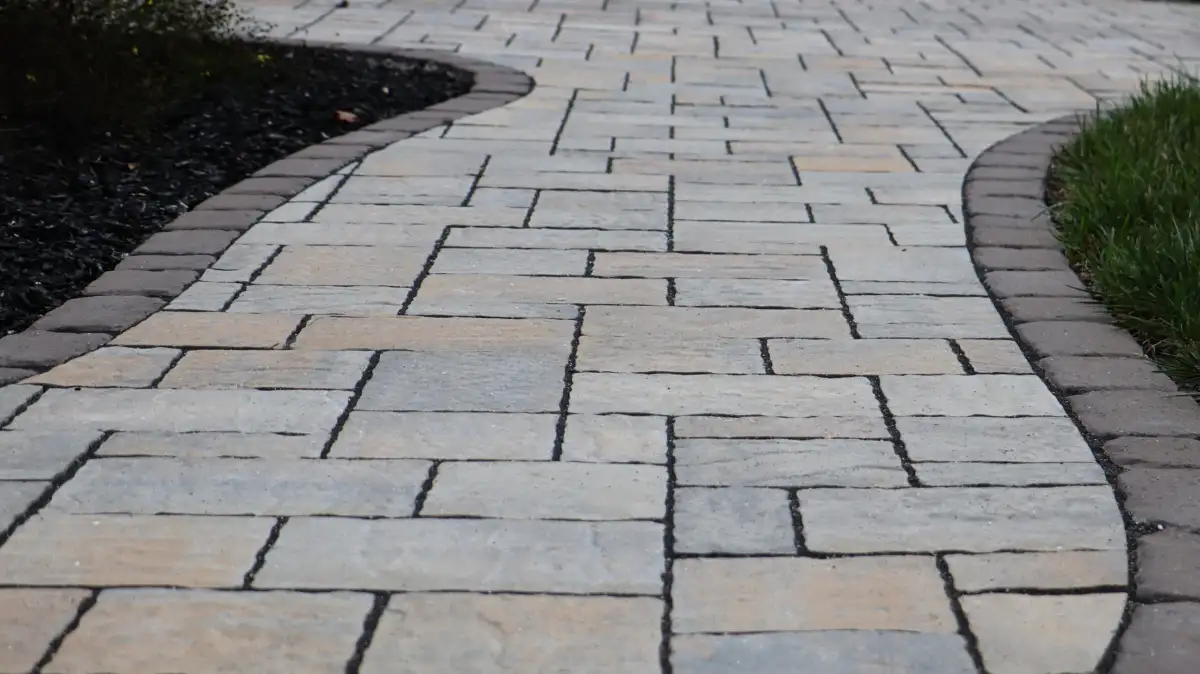
Fixture Quality: Why Material Selection Determines Longevity
The difference between a lighting system that looks beautiful for 20 years and one that deteriorates within three comes down to fixture materials. This is the area where cutting corners costs the most in the long run.
Brass and copper fixtures are the gold standard for outdoor landscape lighting. Both metals develop a natural patina over time that blends into the landscape, and neither corrodes in the way that steel or aluminum does. Solid brass fixtures from manufacturers like FX Luminaire, Unique Lighting, and WAC Landscape carry lifetime warranties on the housing. A brass path light installed today will still function and look appropriate 25 years from now.
Aluminum and painted steel fixtures are significantly cheaper upfront, often 40 to 60 percent less than brass equivalents. However, in South Jersey's climate, where salt air reaches well into Gloucester and Camden counties during strong northeast storms, aluminum fixtures begin showing corrosion within two to four years. Painted finishes chip, peel, and fade. The LED module inside may still work, but the fixture itself looks neglected. Most aluminum fixtures carry three- to five-year warranties, which tells you exactly how long the manufacturer expects them to last.
For properties within 15 miles of the coast in Atlantic and Cape May counties, marine-grade 316 stainless steel or solid copper fixtures are the only materials that will hold up long-term. The incremental cost is 20 to 30 percent above standard brass, but the alternative is replacing fixtures every three to five years.
Common Mistakes That Ruin Outdoor Lighting
The three most frequent mistakes in residential landscape lighting are over-lighting, wrong color temperature, and visible fixture placement. All three are avoidable with proper design.
Over-lighting is the most common problem. Homeowners and inexperienced installers tend to equate more light with better results. The opposite is true. Professional lighting design relies on contrast, the interplay between illuminated areas and shadow. A property where every surface is lit to the same brightness looks flat, washed out, and vaguely commercial. The best designs leave strategic areas in darkness to give the eye relief and make the lit elements more dramatic by comparison.
Mixed color temperatures create visual chaos. When warm 2700K path lights sit next to cool 5000K security floods, the result is jarring and uncoordinated. Every fixture in a cohesive lighting design should operate at the same color temperature, with the only exceptions being dedicated security fixtures mounted high on the structure and away from the designed landscape views.
Visible fixtures break the illusion. The goal of professional lighting design is for guests to notice the light, not the source. Fixtures should be concealed behind plants, recessed into hardscape, or positioned where natural sightlines do not cross them. If someone standing on your patio can see the bright face of an uplight, it is either poorly aimed or poorly placed.
The Design Process: Night-Time Demos and Iterating Before Installation
A professional outdoor lighting installation begins with a daytime site evaluation where the designer walks the entire property, identifies focal points, maps hardscape and planting areas, notes architectural features, and documents existing electrical infrastructure. This visit produces a preliminary lighting plan with fixture counts, positions, and wattage calculations.
The critical step that separates professional installations from basic contractor work is the night-time demonstration. Before any permanent wiring is run, the designer returns after dark with portable demonstration fixtures and places them at the proposed locations. You walk the property together, seeing exactly how each element will look. Fixtures get repositioned, angles get adjusted, and entire zones get rethought based on what the actual nighttime conditions reveal. This iterative process typically takes one to two evening sessions and is the single most important step in achieving a result that exceeds expectations.
Once the design is finalized, installation takes two to five days depending on property size and complexity. Low-voltage wiring is buried in shallow trenches alongside walkways and through planting beds, a transformer is mounted near the electrical panel, and each fixture is permanently installed and aimed. A final evening walkthrough confirms every fixture, zone, and dimming level before the project is complete.
Investment Ranges for South Jersey Properties
Outdoor lighting investment scales with property size, design complexity, and fixture quality. Here is what to expect for South Jersey residential projects using professional-grade brass and copper fixtures:
- Accent Package ($3,000 to $8,000): Front facade uplighting, entry path lights, and two to three specimen tree uplights. This is the starting point for homeowners who want curb appeal after dark and basic landscape illumination.
- Full Property Lighting ($8,000 to $15,000): Complete front and rear landscape lighting including architectural, path, step, focal point, and outdoor living area fixtures. Includes smart controller with four to six zones. This is the most popular tier for established homes in Gloucester and Camden counties.
- Estate Lighting ($15,000 to $30,000+): Comprehensive lighting design for larger properties with multiple outdoor living zones, extensive hardscape, water features, long driveways, and perimeter landscape. Includes eight or more zones, full smart home integration, and premium fixture selection throughout.
Operating costs for LED landscape lighting systems are remarkably low. A full-property system running six hours per night typically adds $5 to $15 per month to your electric bill. Compare that to the $30,000 to $80,000 you likely invested in the hardscape, plantings, and outdoor structures that the lighting is designed to showcase. At those economics, landscape lighting delivers more visual impact per dollar than almost any other outdoor improvement.
Why Lighting Should Be Part of Your Next Outdoor Project
The best time to integrate lighting into your property is during a new build or renovation, when trenching for wire runs can happen before hardscape is laid and planting beds are established. Retrofitting lighting into an existing landscape is absolutely possible, and we do it regularly, but planning ahead saves on labor and produces cleaner installations with zero disruption to mature plantings.
At Miller's Landscaping, we design and install outdoor lighting systems as part of our full-service landscape design process. The same team that builds your patio, plants your trees, and constructs your outdoor kitchen also designs the lighting that brings it all to life after dark. That integration means every fixture position is considered alongside plant placement, hardscape layout, and drainage, not retrofitted as an afterthought.
We have been designing outdoor lighting for properties across Gloucester, Camden, Salem, Atlantic, Cape May, and Cumberland counties for over seven years. Every installation includes a night-time demonstration, professional-grade brass and copper fixtures, a smart zoning controller, and a system backed by manufacturer lifetime warranties.
Schedule Your Lighting Consultation
Contact Miller's Landscaping for a free on-site evaluation. We will assess your property during the day and return after dark for a live lighting demonstration, so you see exactly what your home could look like before any work begins.
Get a Free Estimate