
When to Install a Sprinkler System in South Jersey (and What It Costs)
The best time to install a sprinkler system in South Jersey is late April through early June, before the summer heat arrives and while the ground is still soft enough to trench without excessive effort. If you are reading this in May, you are in the ideal installation window right now. Waiting until mid-summer means your new lawn and plantings will suffer through the hottest weeks without automated watering, and installers are often booked out 3 to 4 weeks during peak season.
This guide covers everything South Jersey homeowners need to know about sprinkler system installation: the right timing for our climate, which system type fits your property, realistic cost expectations, and the mistakes that lead to wasted water, dead zones, and expensive repairs. Whether you are building a brand-new irrigation system or replacing an aging one, these fundamentals will help you make a smart investment.

Why Spring Is the Best Time to Install Irrigation in South Jersey
South Jersey sits in USDA Hardiness Zone 7a, which means our growing season kicks into full gear by mid-April and runs through late October. The transition from spring to summer happens fast here. By early June, daytime temperatures regularly reach the low to mid 80s, and by July, heat indexes can push past 95 degrees. Lawns, garden beds, and newly planted shrubs need consistent moisture during this stretch, and manual watering with a hose or portable sprinkler simply cannot match the coverage and efficiency of a properly designed irrigation system.
Installing your sprinkler system in May gives you three key advantages:
- Your lawn gets established watering before summer stress. Cool-season grasses like tall fescue and Kentucky bluegrass, which dominate South Jersey lawns, need consistent moisture during the late spring growth surge. An irrigation system installed in May gives your turf 6 to 8 weeks of automated watering before the first major heat wave hits.
- The soil is cooperative. In Gloucester County's sandy loam soils and Camden County's heavier clay pockets, May ground conditions are ideal for trenching. The soil is moist enough to cut cleanly but dry enough that trenches do not collapse or fill with water. By August, the sandy soils harden and the clay soils bake to near-concrete consistency.
- Contractor availability is better. Most irrigation installers in the South Jersey market book up heavily in June and July. Scheduling your install for May typically means shorter wait times and more flexibility on start dates.
Types of Sprinkler Systems for South Jersey Properties
Not every property needs the same irrigation approach. The right system depends on your lot size, what is planted, your water pressure, and how much automation you want. Here are the three main options our crews install across the region.
Rotor Systems
Rotor heads rotate in a fixed arc, throwing water 25 to 50 feet depending on the nozzle and pressure. They are the workhorses of residential irrigation in South Jersey, covering large lawn areas efficiently with fewer heads than spray systems. A typical half-acre residential lot in Gloucester or Salem County can be covered with 15 to 25 rotor heads divided across 4 to 6 zones.
Rotors deliver water slowly and evenly, which is important on the sandy soils that dominate much of South Jersey. Sandy soil absorbs water quickly, so the slow application rate of rotors matches the soil's infiltration capacity. Faster spray heads can overwhelm sandy ground, causing runoff before the root zone gets adequately soaked.
Best for: Open lawn areas larger than 500 square feet, properties with adequate water pressure (40+ PSI), and most standard residential lots in our service area.
Spray Systems
Fixed spray heads pop up and deliver water in a fan pattern, covering 5 to 15 feet. They apply water faster than rotors, which makes them ideal for small, defined areas where you need precise coverage without overshoot. Garden beds, narrow side yards, parking strips, and planting areas along foundations are all natural fits for spray zones.
In South Jersey, spray heads work well for the smaller beds and border areas that surround hardscaped patios and walkways. They keep water off the pavers and stonework while thoroughly covering the adjacent plantings.
Best for: Small lawn sections, garden beds, tight spaces between structures, and areas adjacent to hardscaping where overspray would be wasteful.
Drip Irrigation
Drip systems deliver water directly to the soil surface through emitters spaced along flexible tubing. They use 30 to 50 percent less water than spray or rotor systems because virtually zero moisture is lost to evaporation or wind drift. For South Jersey homeowners who have invested in custom landscape design with specimen shrubs, perennial beds, and ornamental plantings, drip irrigation is the most efficient and plant-friendly option.
Drip is also the right choice for sloped areas where conventional sprinklers cause runoff, and for beds with mulch or rock installation where surface watering would displace the ground cover.
Best for: Established garden beds, foundation plantings, slopes, areas under mulch, container gardens, and vegetable gardens.
How a Sprinkler System Is Installed
Understanding the installation process helps you plan for the disruption (it is minimal) and ensures your contractor is following best practices. Here is the typical sequence for a residential install in South Jersey.
Step 1: Site Assessment and Design
Before any trenching starts, a proper installation begins with a site survey. The installer measures your property, identifies lawn areas versus beds versus hardscape, checks your water pressure and flow rate at the meter, and designs a zone layout that delivers even coverage without exceeding your available water supply.
This step matters more than most homeowners realize. An undersized system with too few zones will have weak pressure and poor coverage. An oversized system wastes money on heads and pipe you do not need. The design phase is where the difference between a good installer and a cheap one becomes obvious.
Step 2: Trenching
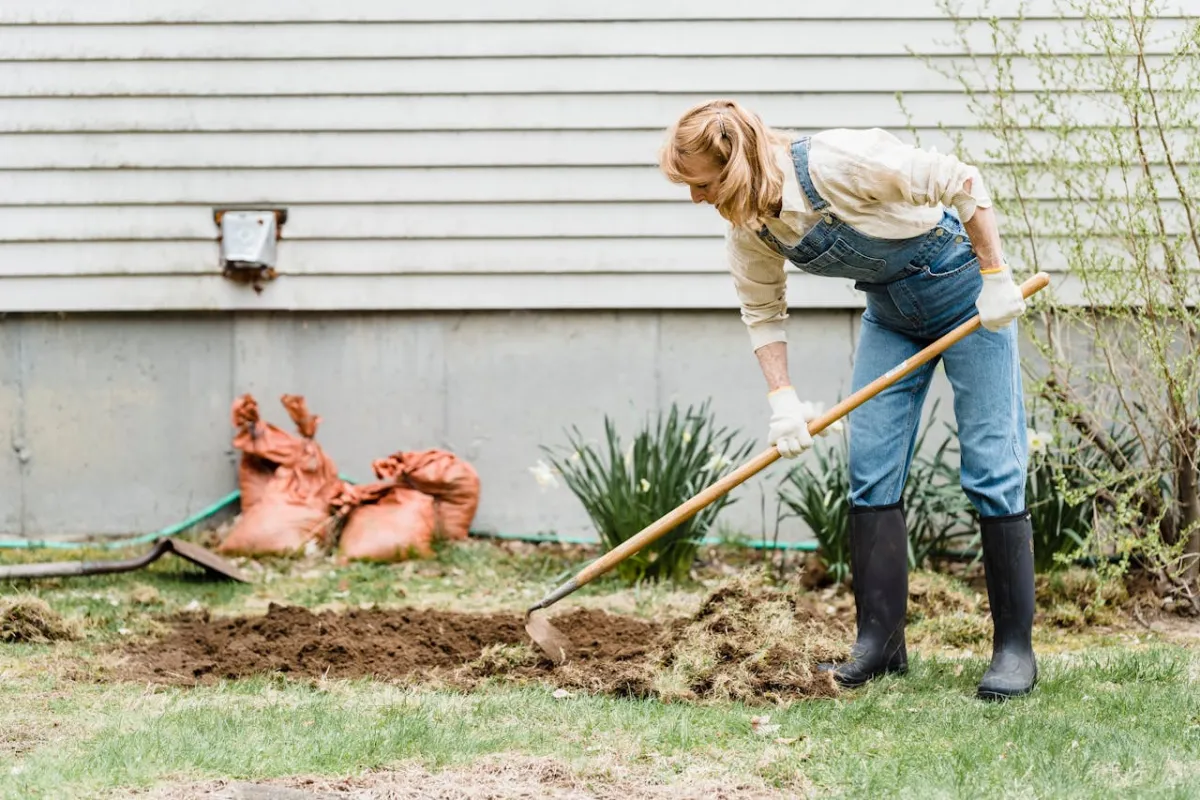
Main supply lines are typically trenched 8 to 12 inches deep across the property. Lateral lines (the smaller pipes feeding individual heads) run 6 to 8 inches deep. In South Jersey, most residential installs use a vibratory plow that pulls pipe through the ground with minimal surface disturbance. The lawn recovers within 1 to 2 weeks with proper watering.
Gloucester County properties on sandy soil trench easily and quickly. Camden County properties with heavier clay require more equipment time and may show surface disruption for slightly longer during recovery.
Step 3: Head Placement and Piping
Sprinkler heads are installed at the locations specified in the design plan. Each head is connected to a lateral line and adjusted for arc, radius, and flow. Proper head-to-head coverage (where the spray from one head reaches the adjacent head) is the single most important factor in even watering. Gaps in coverage create brown spots; overlaps waste water.
Step 4: Controller and Valve Installation
The controller (timer) is typically mounted in the garage or on an exterior wall near the main water supply. Each zone gets its own valve, and the controller activates each zone on a programmable schedule. Modern smart controllers connect to Wi-Fi and adjust watering automatically based on weather data, soil moisture sensors, and seasonal changes.
Step 5: Testing and Adjustment
After installation, every zone is run while the installer walks the property to check for proper coverage, leaks, misdirected heads, and pressure issues. This walkthrough is critical. Small adjustments to head angles and nozzle sizes during testing can make or break the system's long-term performance.
Ready to Install a Sprinkler System?
Miller's Landscaping designs and installs complete irrigation systems for residential properties across all six South Jersey counties. We handle site assessment, design, installation, and seasonal maintenance. View our sprinkler services or contact us for a free estimate.
Get a Free EstimateSprinkler System Costs in South Jersey
Irrigation system pricing varies based on property size, number of zones, head type, controller features, and soil conditions. Here are realistic 2026 cost ranges for the Gloucester, Camden, and Salem County area.
Residential Installation Costs
- Small lot (under 1/4 acre, 3-4 zones): $2,800 to $4,500
- Average lot (1/4 to 1/2 acre, 5-7 zones): $4,500 to $7,500
- Large lot (1/2 to 1 acre, 8-12 zones): $7,500 to $12,000
- Estate property (1+ acre, 12+ zones): $12,000 to $20,000+
These ranges include design, materials, labor, controller, backflow preventer, and testing. They do not include permits (some Gloucester County municipalities require plumbing permits for irrigation taps) or any lawn repair beyond the basic settling period.
Smart Controller Upgrade
A basic timer-based controller runs $150 to $300 installed. Upgrading to a smart controller (Rachio, Hunter Hydrawise, or similar) adds $200 to $400 to the project cost but saves 20 to 40 percent on water usage over the life of the system. For South Jersey homeowners on municipal water, where rates have increased 15 to 20 percent over the past 3 years across most Gloucester and Camden County utilities, the payback period on a smart controller is typically 2 to 3 seasons.
Annual Maintenance Costs
Irrigation systems in South Jersey need two seasonal service visits:
- Spring startup (March/April): $75 to $150. The system is pressurized, tested zone by zone, heads are adjusted, and any winter damage is identified and repaired.
- Fall winterization (October/November): $75 to $150. Compressed air is blown through every zone to clear the lines before freezing temperatures arrive. Skipping winterization in South Jersey is a guaranteed way to crack pipes and damage valves. Even though our winters are milder than north Jersey, we regularly see overnight lows in the teens and twenties from December through February.
Budget $150 to $300 per year for routine maintenance. This is modest compared to the cost of repairing freeze damage ($300 to $800+ per incident) or replacing a system that was not properly maintained.
Common Mistakes to Avoid
After installing and servicing hundreds of irrigation systems across South Jersey, these are the problems we see most often.
Skipping the Design Phase
Some contractors install heads based on a rough visual layout rather than a measured design. The result is uneven coverage: some areas get double-watered while others dry out. A proper design accounts for head spacing, nozzle selection, pipe sizing, pressure loss over distance, and zone flow rates. It takes an extra hour upfront and saves years of frustration.
Ignoring Water Pressure
Every sprinkler head has an optimal operating pressure, typically 30 to 45 PSI for rotors and 20 to 30 PSI for spray heads. If your home's water pressure is 70 PSI (common in parts of Camden County served by the New Jersey American Water system), you need a pressure regulator. Without it, heads mist instead of spraying, wasting water to evaporation and wind. If your pressure is low (under 35 PSI), the system needs fewer heads per zone and possibly a booster pump.
Watering on the Wrong Schedule
The single most common mistake after installation is running the system too frequently with too little water per session. South Jersey lawns perform best with deep, infrequent watering: 1 to 1.5 inches of water per week, applied in 2 to 3 sessions of 30 to 45 minutes per zone. Daily 10-minute cycles produce shallow roots, fungal disease, and weed invasion. This is true whether you are maintaining newly installed sod (after the initial establishment period) or a mature lawn.
Not Winterizing
We touched on this above, but it bears repeating: every irrigation system in South Jersey must be winterized before the first hard freeze. Water left in the pipes expands when it freezes, cracking PVC fittings, splitting poly pipe, and destroying valve diaphragms. A $100 winterization visit prevents $500 to $1,000 in spring repair bills. No exceptions.
Sprinkler Systems and Your Overall Landscape
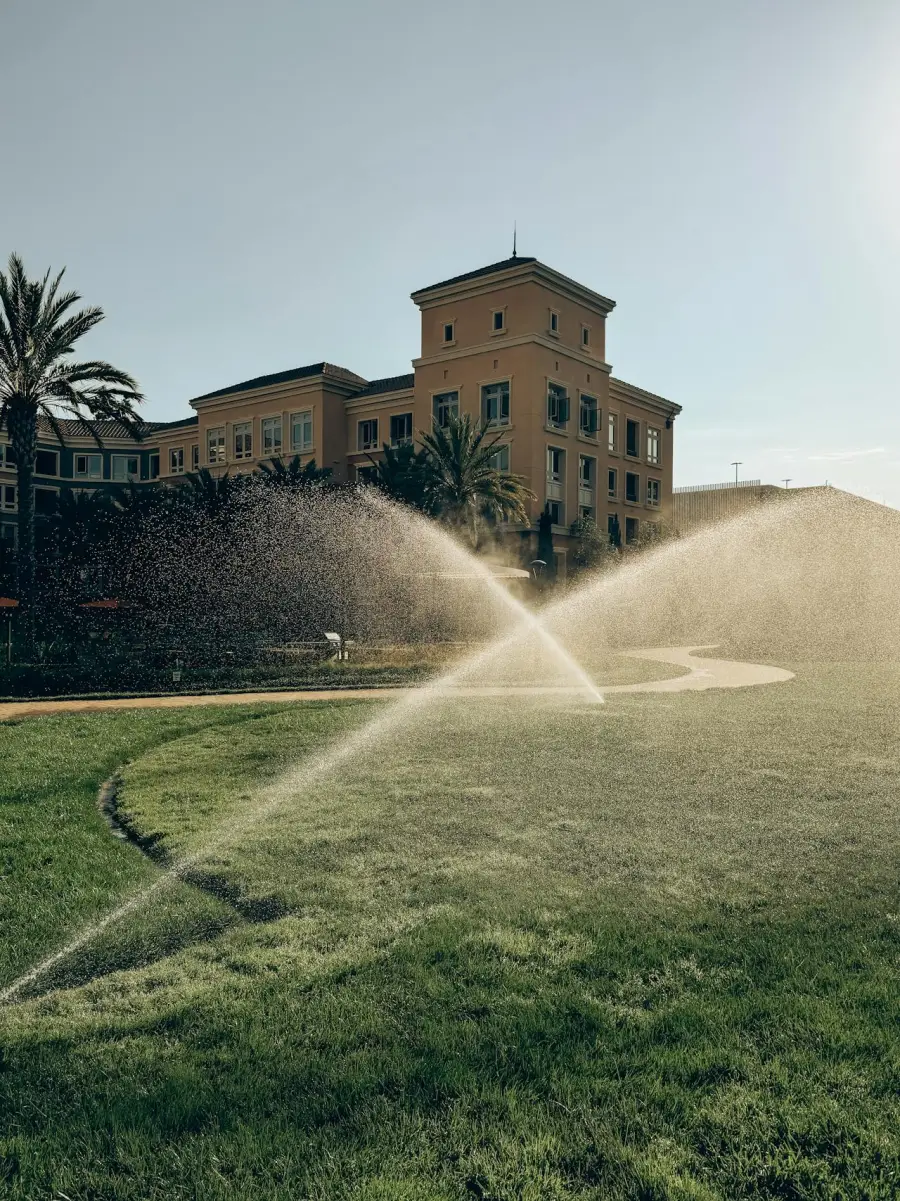
An irrigation system is not a standalone improvement. It is the infrastructure that protects and sustains every other investment you make in your property. That new sod installation needs consistent watering for the first 3 weeks to establish roots. The landscape design you invested in with specimen shrubs and perennials needs reliable moisture through the summer. Even your mulch beds perform better when the soil underneath stays evenly moist rather than cycling between drought and flood.
If you are planning an outdoor living space with a patio and surrounding plantings, the irrigation system should be designed and installed either before or simultaneously with the hardscaping. Running irrigation lines under a finished paver patio after the fact is expensive and disruptive. Planning both projects together saves time, money, and ensures the planting areas around your new patio receive proper coverage from day one.
For homeowners who have already added outdoor lighting, there is a practical benefit to coordinating with your irrigation installer: both systems use low-voltage wiring and underground conduit. If trenching is already happening for irrigation, adding lighting conduit at the same time costs a fraction of what it would as a separate project.
How to Choose the Right Installer
Not all irrigation contractors in South Jersey deliver the same quality of work. Here is what to look for when comparing estimates:
- Detailed design plan. A reputable installer provides a scaled drawing showing head locations, zone boundaries, pipe routing, and controller placement before starting work. If someone quotes your project by eyeballing the yard for 5 minutes, find another contractor.
- Licensed and insured. New Jersey requires contractors who connect to the municipal water supply to hold appropriate licenses. Ask for proof of insurance, including general liability and workers' compensation.
- Warranty coverage. Most professional installations come with a 1 to 2 year warranty on parts and labor. Anything shorter suggests the installer is not confident in their own work.
- Local presence. A South Jersey-based company understands our soil types, water pressure variations by municipality, local permit requirements, and seasonal timing better than a national franchise operating out of a call center.
- Seasonal maintenance offered. The best installation companies also handle spring startups and fall winterizations. This continuity means the same team that installed your system is maintaining it, which catches problems early.
The Bottom Line
A properly designed and installed sprinkler system is one of the highest-return investments you can make in your property. It protects your lawn, plantings, and landscape investment from South Jersey's summer heat, reduces your time spent dragging hoses, and typically pays for itself within 5 to 7 years through water savings (especially with a smart controller) and avoided plant replacement costs.
The ideal installation window is right now: May through early June, before the heat sets in and before contractors are booked solid for the summer. If you have been thinking about irrigation for your property, this is the season to act.
Get a Sprinkler System Quote
Miller's Landscaping installs complete residential irrigation systems across Gloucester, Camden, Salem, Atlantic, Cape May, and Cumberland counties. Contact us for a free on-site estimate that includes a custom zone design for your property.
Get a Free Estimate