
Lawn Top-Dressing in South Jersey
Top-dressing adds a thin layer of screened compost over your lawn to improve soil structure, build organic matter, and create a smoother, healthier playing surface. The best long-term soil improvement for South Jersey turf.
What Is Top-Dressing and What Does It Cost?
Top-dressing is the process of spreading a thin layer (1/4 to 1/2 inch) of screened compost, sand, or a custom soil blend over an existing lawn. The material works its way down between the grass blades and into the soil over time, improving the soil structure beneath your turf. In South Jersey, top-dressing typically costs $0.05 to $0.10 per square foot, which puts a standard quarter-acre lawn in the $300 to $600 range including material and labor.
South Jersey's heavy clay soils and sandy coastal soils both benefit from top-dressing, but for different reasons. Clay soils in Gloucester, Camden, and Salem counties compact easily and drain poorly. Compost breaks up clay particles and improves water infiltration. Sandy soils in Atlantic and Cape May counties drain too fast and cannot retain moisture or nutrients. Compost increases the water-holding capacity so your lawn stays hydrated longer between waterings.
Top-dressing delivers the best results when combined with core aeration and overseeding. The compost fills aeration holes, creating an ideal seedbed for new grass while feeding the existing root system with organic nutrients.
Benefits of Lawn Top-Dressing
Top-dressing is one of the most effective and least understood lawn improvement methods available. Here is what it does for your turf and soil over time.
Improves Soil Structure
Compost introduces organic matter that breaks up heavy clay and adds body to sandy soils. Over 2 to 3 years of annual top-dressing, you can transform poor native soil into a rich growing medium that supports deep root growth.
Levels Uneven Surfaces
Minor bumps, dips, and depressions in your lawn create scalping during mowing and puddles after rain. Top-dressing fills low spots gradually without smothering the grass, creating a smoother, more uniform surface.
Feeds Turf Naturally
Quality compost is a slow-release organic fertilizer. As it decomposes, it feeds beneficial soil microbes and releases nitrogen, phosphorus, and potassium at rates the grass can absorb. This supplements your fertilization program without the risk of chemical burn.
Improves Water Retention
Organic matter holds moisture like a sponge. In sandy soils, this means your lawn stays hydrated longer between waterings or rain events. In clay soils, improved structure allows water to penetrate rather than running off the surface.
Reduces Thatch
Compost introduces beneficial microorganisms that accelerate thatch decomposition. A thin thatch layer (under 1/2 inch) is normal and healthy, but excess thatch blocks water and air from reaching roots. Top-dressing keeps thatch in balance naturally.
Creates Better Seedbed
When applied after aeration and before overseeding, compost fills the aeration holes and provides ideal seed-to-soil contact. Germination rates are significantly higher than broadcasting seed onto bare, compacted soil.
How We Apply Top-Dressing
Top-dressing requires the right material, the right thickness, and even distribution to be effective without smothering your grass. Too thick and you kill the turf. Too thin and the benefit is minimal. Our process ensures consistent coverage at the optimal depth.
- Material selection: We use screened compost blended for South Jersey soil conditions. The compost is fine enough to work into the canopy without clumping on the surface.
- Core aeration first: We strongly recommend aerating before top-dressing. The aeration holes accept compost and channel it directly into the root zone where it has the greatest impact.
- Even application: Compost is spread at 1/4 to 1/2 inch depth using professional spreaders. We work the material into the turf with drag mats or rakes to ensure it settles between grass blades rather than sitting on top.
- Overseeding (optional): If combined with overseeding, seed is broadcast after the compost layer is worked in. The result is an ideal seedbed for maximum germination.
- Watering instructions: We provide specific post-application watering guidelines based on your soil type and whether seeding was included.
Top-Dressing FAQ
The best time for top-dressing in South Jersey is early fall (September through mid-October), especially when combined with aeration and overseeding. The compost provides nutrients during the peak root-growth period and creates an ideal seedbed for new grass. Spring top-dressing (April through May) is also effective for soil improvement but should be done without overseeding to avoid crabgrass competition.
Not when applied correctly. We apply compost at 1/4 to 1/2 inch depth, which is thin enough for grass blades to grow through within days. The key is even distribution and using fine, screened compost that does not clump. We work the material into the canopy during application so grass blades are exposed to sunlight immediately. Applying more than 1/2 inch in a single treatment risks smothering, which is why proper technique matters.
For most South Jersey lawns, annual top-dressing in the fall produces the best long-term results. After 2 to 3 consecutive years, you will notice a significant improvement in soil quality, drainage, and turf density. Lawns with severe soil issues (heavy clay or very sandy soil) may benefit from top-dressing twice per year (spring and fall) for the first 2 years to accelerate improvement.
Sand top-dressing is common on golf courses and sports fields where a firm, fast-draining surface is the priority. For residential lawns in South Jersey, we recommend compost or a compost-sand blend instead. Pure sand does not add organic matter or nutrients, and mixing sand into heavy clay soil can actually create a harder surface (similar to concrete) if not done in the correct ratio. Compost improves both soil structure and fertility simultaneously.
Build the Best Possible Lawn
Aeration & Overseeding
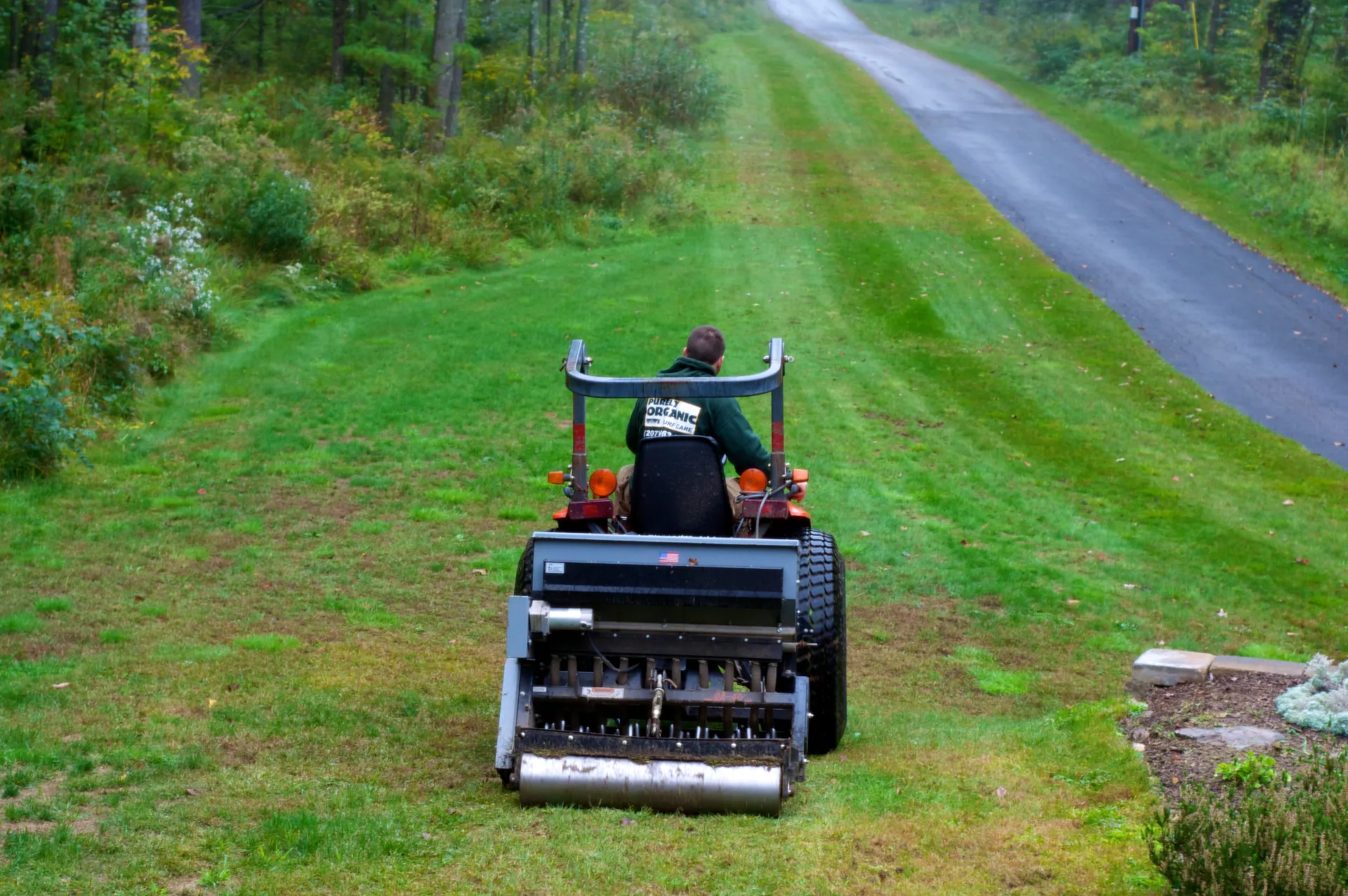
The perfect companion to top-dressing. Relieve compaction and fill in thin turf with premium seed.
Learn More →Fertilization & Weed Control
Maintain your improved lawn with our professional 7-step fertilization program.
Learn More →
Landscape Maintenance
Year-round care including mowing, fertilization, seasonal cleanup, and more.
Learn More →Improve Your Soil, Improve Your Lawn
Get a free estimate for top-dressing, aeration, and overseeding. We serve properties across all 6 South Jersey counties.