
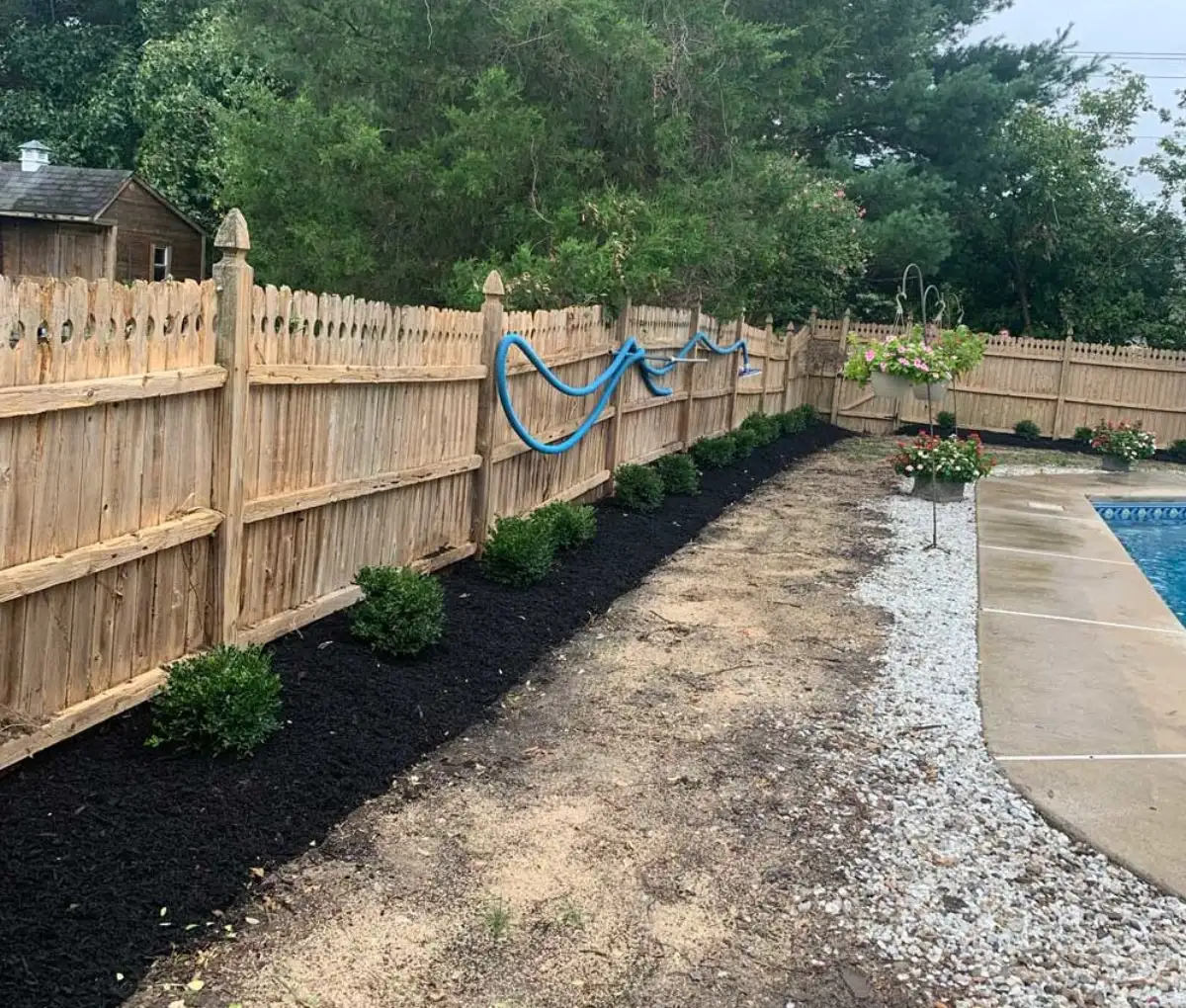
The best time to mulch in South Jersey is mid-April through late May, after the soil has warmed past 50 degrees but before summer heat drives up moisture loss. If you are reading this in late April, you are in the ideal window right now. Waiting until June or July means weeds have already germinated, soil moisture is dropping fast, and you are fighting problems that a timely mulch application would have prevented.
This guide covers everything South Jersey homeowners need to know about spring mulching: the right timing for our climate zone, which mulch type works best for different situations, how much you need, proper depth, and the mistakes that waste money or damage plants. Whether you handle your own beds or hire a professional for mulch installation, these fundamentals apply the same way.

Why Spring Mulching Matters in South Jersey
South Jersey sits in USDA Hardiness Zone 7a, which means our growing season runs roughly from mid-April through late October. The transition from winter to summer happens fast here. March brings unpredictable freeze-thaw cycles, April warms the soil enough for weed seeds to germinate, and by June we are dealing with sustained heat and the occasional drought stretch that stresses unprotected plantings.
Mulch addresses all three of those seasonal pressures at once:
- Weed suppression. A 2 to 3 inch layer of mulch blocks sunlight from reaching weed seeds at the soil surface. This is the single most effective weed prevention method for landscape beds, and it works without chemicals. In Gloucester County's sandy loam soils, weeds germinate aggressively once soil temperatures reach 55 degrees in April. Mulching before that threshold cuts your weeding time for the entire summer.
- Moisture retention. Mulch reduces soil evaporation by 25 to 50 percent, based on mulch type and depth. During July and August, when South Jersey temperatures regularly hit the upper 80s to low 90s, that retained moisture can be the difference between thriving shrubs and stressed plantings that need constant supplemental watering from your irrigation system.
- Soil temperature regulation. Mulch acts as insulation. In spring, it moderates the daily temperature swings that stress plant roots. In summer, it keeps the root zone 8 to 10 degrees cooler than bare soil. In our region, where afternoon soil surface temperatures on exposed beds can hit 120 degrees in July, that buffer is significant.
- Soil health. Organic mulch (hardwood, cedar, pine bark) breaks down over 1 to 2 seasons, adding organic matter to the soil. This is particularly valuable in Gloucester and Salem counties, where the sandy soils have naturally low organic content. Each year's mulch application builds the soil a little more, improving water-holding capacity and nutrient retention over time.
When Exactly to Apply Mulch in South Jersey
Timing matters more than most homeowners realize. Mulching too early or too late reduces the benefits and can actually cause problems.
The Ideal Window: Mid-April Through Late May
In a typical year across Gloucester, Camden, and Salem counties, the ideal mulching window opens around April 15 and runs through the end of May. Here is why this window works:
- Soil temperatures have risen above 50 degrees, so the mulch is not trapping cold, wet soil that delays spring plant growth.
- Spring bulbs (daffodils, tulips, crocuses) have already emerged and are easy to mulch around without burying them.
- Perennials are pushing new growth, making it easy to see where plants are and avoid smothering them.
- Weed seeds have not yet germinated in significant numbers, so the mulch acts as a true preventer rather than a cover-up.
- The ground is workable but not yet baked hard, making bed prep (edging, pulling existing weeds) much easier.
Too Early: Before April 10
Mulching in March or early April, before the soil has warmed, traps cold moisture against plant crowns and roots. This creates conditions for crown rot, root rot, and fungal diseases, especially in South Jersey's heavier soils in Camden County's eastern sections near Winslow and Berlin. It also delays the warming process that triggers spring growth in perennials and shrubs.
Too Late: After June 1
By early June, weeds are already established, soil moisture is declining, and temperatures are climbing. You can still mulch in June, but you will need to weed thoroughly first (weeds under mulch do not die; they grow through it), and you have already lost weeks of moisture retention and weed prevention during the most active germination period.
Ready for Fresh Mulch?
Miller's Landscaping delivers and installs mulch across all six South Jersey counties. We handle bed prep, edging, and spreading to the correct depth. View our mulch services or contact us for a free estimate.
Get a Free EstimateChoosing the Right Mulch for Your Property
Not all mulch performs the same way. The best choice depends on your soil type, what is planted in the beds, how much maintenance you want to do, and your aesthetic preferences. Here are the four most common options our crews install across South Jersey, with honest assessments of each.
Hardwood Mulch
Hardwood shredded mulch is the most popular choice in South Jersey for good reason. It is made from deciduous trees (oak, maple, hickory), decomposes at a moderate rate, and stays in place well, even on the slight slopes common in Gloucester County's residential lots. As it breaks down over 12 to 18 months, it adds organic matter and nutrients to the sandy soils that dominate our area.
Available in natural brown, black-dyed, and red-dyed varieties. The dyed versions hold their color longer through the season. Natural hardwood starts brown and fades to gray by late summer, which some homeowners prefer for a rustic look and others find tired-looking.
Best for: General-purpose bed coverage, entry plantings, flower beds, and most South Jersey residential properties.
Cedar Mulch
Cedar contains natural oils (thujone and plicatic acid) that repel ants, termites, and certain other insects. It also resists decay longer than hardwood, lasting 2 to 3 years before needing a full refresh. The trade-off is cost: cedar typically runs 30 to 50 percent more than hardwood per cubic yard.
Best for: Beds adjacent to the house (where insect deterrence matters), properties near wooded areas with heavy pest pressure, and homeowners who prefer a longer refresh cycle.
Pine Bark Mulch
Pine bark comes in nuggets (large chunks) or fines (shredded). The nuggets are decorative but tend to float and wash away during South Jersey's frequent spring thunderstorms. Pine bark fines stay in place better and acidify the soil slightly as they decompose, which benefits acid-loving plants like azaleas, rhododendrons, blueberries, and hollies that are common in our region's landscapes.
Best for: Beds with acid-loving shrubs, wooded garden areas, and properties going for a natural, organic aesthetic.
Decorative Rock
River rock, pea gravel, and crushed stone are not mulch in the traditional sense, but they serve a similar ground-cover function. Rock does not decompose, does not need annual replacement, and does not attract insects. However, it does not improve soil health, retains heat (which can stress plants in South Jersey summers), and makes it difficult to change plantings later.
Best for: Drainage areas, dry creek beds, modern hardscape accents around patios and walkways, and low-maintenance commercial properties where soil improvement is not a priority.

How Much Mulch Do You Need?
Mulch is sold by the cubic yard. One cubic yard covers approximately 162 square feet at 2 inches deep, or 108 square feet at 3 inches deep. Here is a practical formula:
- Measure the total square footage of your landscape beds (length times width for each bed, added together).
- Decide on depth: 2 inches for beds that already have mulch from last year, 3 inches for bare beds or beds where the old mulch has fully decomposed.
- Divide the square footage by 162 (for 2-inch depth) or 108 (for 3-inch depth) to get the number of cubic yards.
- Add 10 percent for waste, irregular bed shapes, and settling.
For reference, the average South Jersey home with entry plantings, two or three garden beds, and a couple of tree rings typically needs 4 to 8 cubic yards. Larger properties with extensive beds, island plantings, and wooded edges can need 15 to 25 yards or more.
Buying bagged mulch from a home improvement store works for small touch-ups, but for anything over 2 cubic yards, bulk delivery is significantly more cost-effective. A 2-cubic-foot bag covers roughly 8 square feet at 3 inches deep. You would need 40+ bags to equal one cubic yard, and the per-yard cost of bagged mulch is often double or triple the bulk price.
Proper Mulching Technique: Getting the Depth Right
The correct depth for organic mulch in South Jersey is 2 to 3 inches. This is the range that provides full weed suppression and moisture retention without causing the problems that come from over-mulching. It is not a range you should exceed, and here is why.
The Danger of Mulch Volcanoes
The most common mulching mistake in our area, and one we see on almost every street in Gloucester County, is piling mulch against tree trunks and shrub stems in a cone shape. Landscapers call this a "mulch volcano." It looks thorough, but it slowly kills the plant.
When mulch is piled 6 to 12 inches deep against a tree trunk, it traps moisture against the bark. Bark is designed to be dry. Constant moisture causes the bark to soften, crack, and decay, opening the tree to fungal infection, insect infestation, and structural failure. It also encourages the tree to grow adventitious roots into the mulch pile instead of into the ground, creating a shallow, unstable root system.
The correct technique is to leave a 3 to 4 inch gap between the mulch and the trunk (or stem) of every tree and shrub. The mulch should form a flat, even layer that resembles a donut, not a volcano.
Other Common Mistakes
- Over-mulching existing beds. If last year's mulch is still 2 inches deep, you do not need another 3 inches on top. Scrape back the old layer, fluff it with a rake, and add only enough new material to bring the total depth back to 2 to 3 inches. Over-mulched beds (5 or more inches deep) become water-repellent, creating a crusty layer that sheds rain instead of absorbing it.
- Skipping bed prep. Mulch does not kill existing weeds. If you mulch over a bed full of sprouted weeds, they will push through within days. Always weed and edge beds before mulching. The 30 minutes of prep work is what makes the mulch effective for the rest of the season.
- Mulching right up to the house structural base. Leave a 6 to 12 inch gap between mulch and your home's structural base. Organic mulch against a structural base retains moisture that can wick into basement walls and provides a bridge for termites and carpenter ants to access the structure.
- Using landscape fabric under organic mulch. Fabric works well under decorative rock, but under organic mulch it creates more problems than it solves. The mulch decomposes on top of the fabric, weeds root into the decomposed layer, and the fabric prevents the organic matter from reaching the soil. After 2 to 3 years you have a tangled, ineffective mess that is expensive to remove.
What to Do Before You Mulch
Spring mulching is most effective when it is part of a broader spring bed cleanup, not an isolated task. Here is the preparation sequence our maintenance crews follow for every mulch job:
- Cut back dead perennial stems and ornamental grasses from last season. Leave 4 to 6 inches of stem above ground level for plants that grow from the crown.
- Pull or spray all visible weeds. Pay special attention to bed edges where crabgrass and nutsedge invade from the lawn.
- Edge all beds. A clean, defined edge between lawn and mulch bed makes the finished result look dramatically better and prevents grass from creeping into the mulch. Use a half-moon edger or spade to cut a 2 to 3 inch trench along the bed perimeter.
- Check and repair bed borders (if you have stone, brick, or metal edging). Winter frost heave shifts edging in South Jersey more than homeowners expect.
- Rake the existing mulch. Break up any crusty or matted areas so the new layer bonds with the old material instead of sitting on top of a waterproof crust.
- Apply pre-emergent to beds (optional). If your beds had heavy weed pressure last year, a granular pre-emergent applied before mulching adds a second layer of weed prevention beneath the physical mulch barrier.
- Plant any new additions. If you are adding shrubs, perennials, or annuals this spring, plant them before mulching. Digging planting holes through fresh mulch is messy, wastes material, and disrupts the even coverage.
Spring Mulching and Your Landscape Design
Mulch is not just functional. The color and texture of your mulch choice should complement your overall landscape design. Black mulch creates a striking, modern contrast with green plantings and light-colored stone. Natural brown hardwood blends with traditional brick and colonial-style homes that are common across Camden and Gloucester counties. Cedar's golden tone works well with natural stone and woodland garden designs.
If you are planning any hardscaping projects this spring, like a new patio or outdoor living area, coordinate your mulch selection with the paver or stone colors. A cohesive material palette across hardscape and softscape is what separates a professional-looking landscape from a disjointed one.
Mulching Cost Expectations for South Jersey
For budget planning purposes, here are typical 2026 costs for mulch in the Gloucester, Camden, and Salem County area:
- Hardwood mulch (bulk): $35 to $50 per cubic yard, delivered
- Dyed mulch (black/brown/red): $40 to $55 per cubic yard, delivered
- Cedar mulch: $55 to $75 per cubic yard, delivered
- Pine bark nuggets: $40 to $60 per cubic yard, delivered
- Professional installation (labor): $35 to $60 per cubic yard, based on bed accessibility and prep work required
A typical South Jersey home needing 5 to 7 yards of hardwood mulch with professional installation runs $350 to $700 all-in. Larger properties needing 10 to 15 yards run $700 to $1,500. These prices include delivery, bed prep, edging, and spreading to the correct depth.
DIY homeowners save on labor but should factor in delivery fees ($50 to $100 for most local suppliers), their own time (plan 30 to 45 minutes of spreading per cubic yard), and the cost of a wheelbarrow, rake, and edging tools if you do not already own them.
When to Call a Professional
Spreading mulch is straightforward work, and many homeowners handle small jobs themselves. But there are situations where professional installation is the better choice:
- Volume over 5 cubic yards. Wheelbarrowing and spreading 5+ yards of mulch is a full day of hard physical labor. A two-person crew with the right equipment finishes in a few hours.
- Beds on slopes. Mulch on slopes needs to be installed at the right depth and sometimes with a tackifier to prevent washout during heavy rain. Our crews see this frequently on properties in the hilly sections of Gloucester County.
- Properties with extensive plantings. When beds contain dozens of shrubs, perennials, and trees, proper mulching technique around each plant matters. It is easy to accidentally bury plant crowns or smother shallow-rooted groundcovers when you are focused on speed rather than precision.
- Combined with other spring services. If you also need lawn fertilization, shrub pruning, or bed renovation, having one crew handle everything in a single visit is more efficient and ensures the work is sequenced correctly.
Miller's Landscaping provides mulch and rock installation across Gloucester, Camden, Salem, Atlantic, Cape May, and Cumberland counties. We buy in bulk, deliver same-week during the spring season, and handle every step from bed prep through final cleanup.
Get Your Beds Ready for Summer
The spring mulching window is open right now in South Jersey. Contact Miller's Landscaping for a free estimate on mulch delivery and installation across all six counties we serve.
Get a Free Estimate