
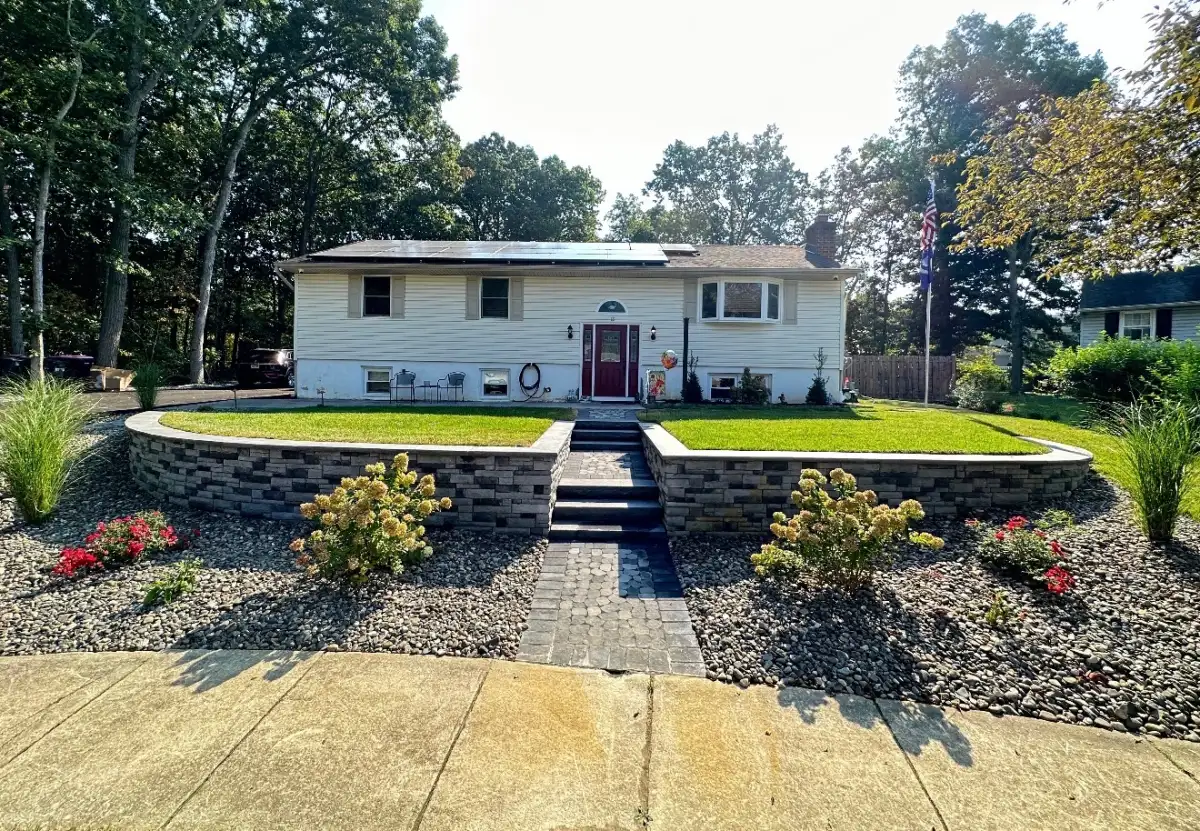
Retaining Wall Construction in South Jersey
Retaining walls that manage grade, control erosion, and create usable outdoor space. Miller's Landscaping builds block and natural stone wall systems with drainage and base preparation planned for South Jersey soil and weather.
Walls Need to Look Good and Hold Back Pressure
A retaining wall is a structural hardscape, not just a decorative border. It has to manage soil pressure, water movement, freeze-thaw cycles, and the load above the wall. Miller's Landscaping evaluates the slope, drainage pattern, access, wall height, and surrounding hardscape before recommending a wall layout.
Retaining walls can open up flat lawn space, protect a patio edge, support a driveway or walkway transition, frame planting beds, or solve erosion near the house. Taller walls or walls carrying heavier loads may require engineering or added reinforcement, and that should be discussed before work begins.
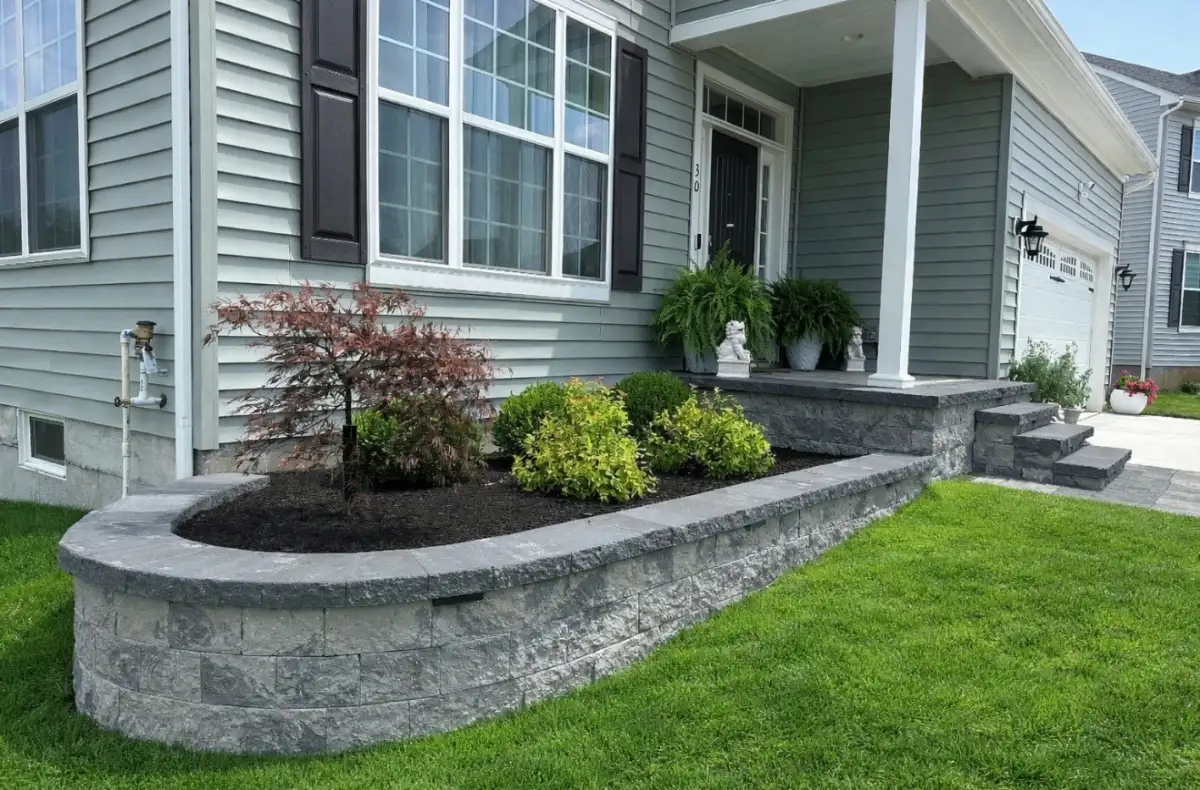
Retaining Wall Options
The right wall depends on height, location, drainage, budget, and the look of the property.
Segmental Block Walls
A reliable choice for clean lines, predictable strength, and tight curves. Block walls can be reinforced with geogrid when height or soil pressure requires it.
Natural Stone Walls
Stone walls bring a more organic look and work well around planting beds, patios, lake-style landscapes, and premium front-yard upgrades.
Seat Walls and Raised Edges
Lower walls can define patios, hold grade at the edge of a hardscape, and create built-in seating around outdoor living areas.
How a Retaining Wall Is Built
Site Review
Measure height, length, slope, access, utilities, water movement, and what the wall needs to support.
Excavation and Base
Excavate the trench, prepare compacted base, and set the first course level because every course above depends on it.
Drainage and Reinforcement
Install drain stone, pipe where needed, fabric, and geogrid reinforcement when the wall height or load calls for it.
Finish and Grade
Cap the wall, backfill correctly, clean the area, and shape the grade so water moves where it should.
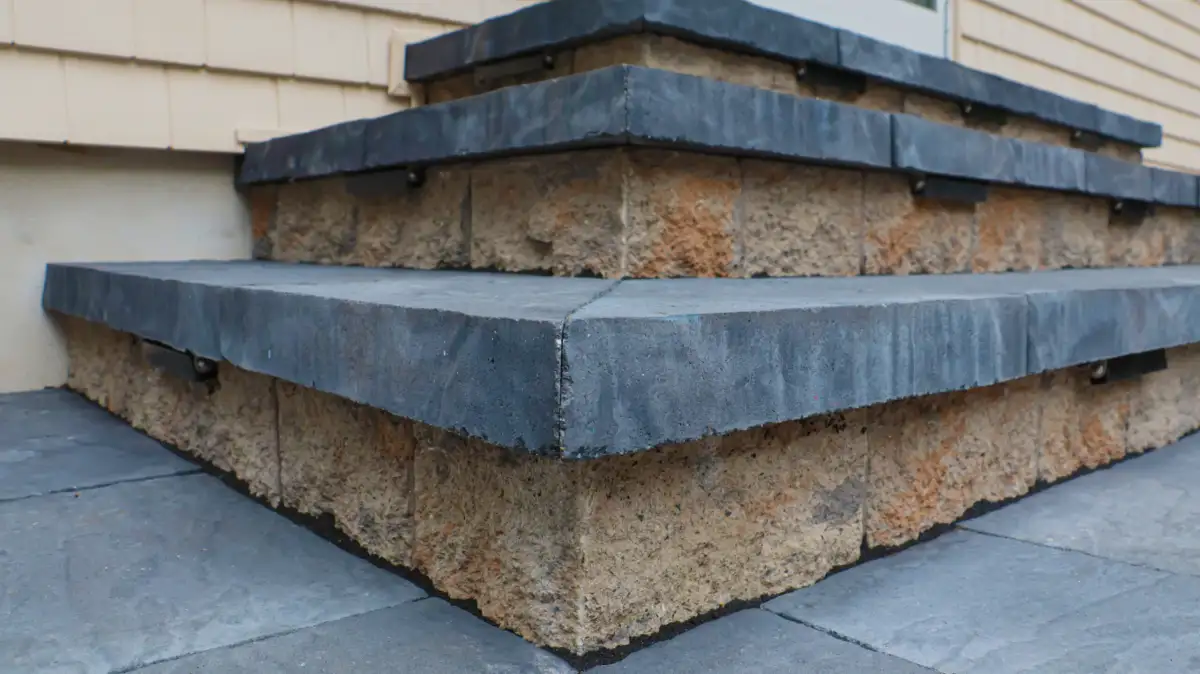
Drainage Is the Difference Between a Wall and a Problem
Most failed retaining walls are not pushed over by dry soil. They fail because water builds pressure behind the wall, softens the base, or has nowhere to drain. A proper retaining wall should include drainage stone, fabric separation, pitch, and discharge planning so water does not sit behind the blocks.
If the wall connects to a patio, walkway, driveway, or steps, those surfaces need to be planned together. Good hardscape design keeps grade changes functional and keeps the finished project from feeling patched together.
Questions About Retaining Walls
Height, slope, soil pressure, nearby driveways, structures, and local requirements all matter. Taller walls and walls supporting heavy loads should be reviewed carefully before installation.
Often, yes. The team needs to look at access, grades, drainage, and whether the existing patio edge can be tied into cleanly without creating water or settlement problems.
Miller's Landscaping is based in Williamstown and serves South Jersey communities across Gloucester County, Camden County, Salem County, and nearby areas.
Ready to Price This Project?
Tell Miller's Landscaping what you want built, where it sits on the property, and any drainage or access concerns. The team will help you plan the right next step.